Trending New Games
Sprunki Reversed Randomized Phase 6
Game Credits
Game title: Sprunki Reversed Randomized Phase 6
Creator: TheSpaceRedBird
Format: Unofficial fan-made music-mixing mod
Original Sprunki concept: NyankoBfLol
Sprunki Reversed Randomized Phase 6: Game Screenshots
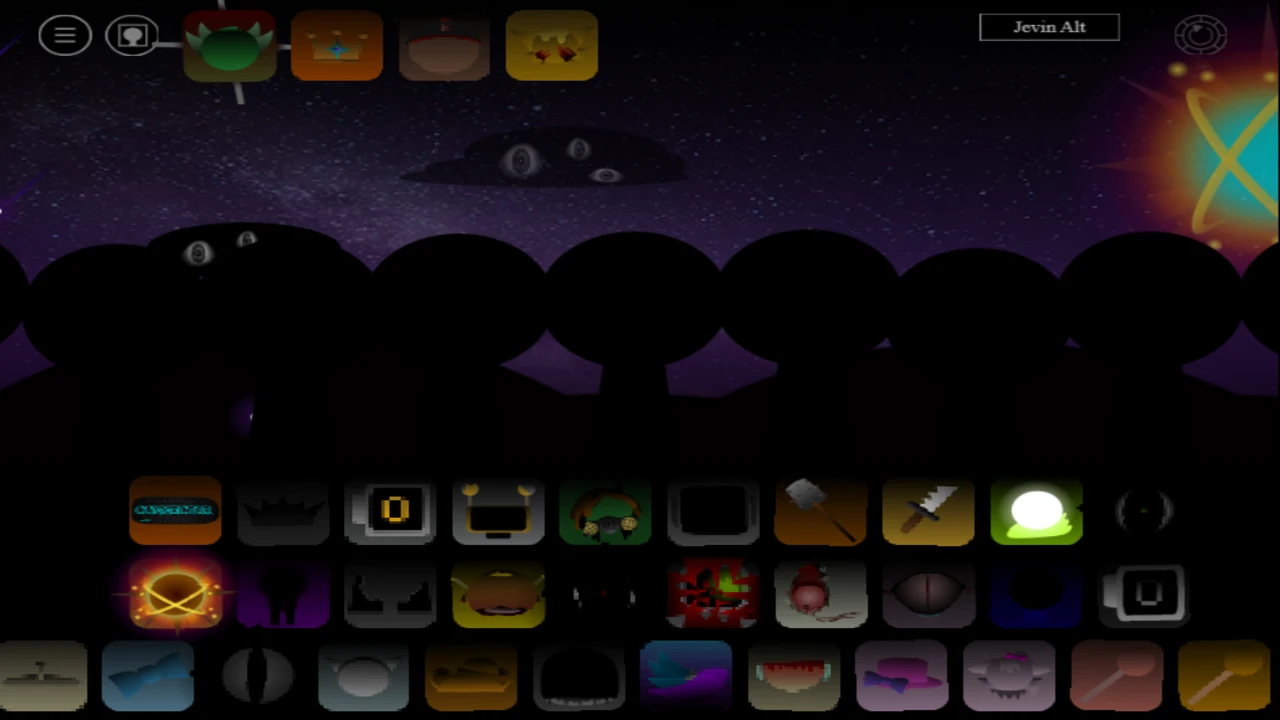
The Empty Stage Already Feels Occupied
Before any performer is added, the background is not truly empty.
The stage uses a purple space scene with dark clouds, distant stars, and small eyes appearing inside the black shapes. A bright planetary object sits near the right side with a large yellow cross over it.
The inactive character positions appear as solid black silhouettes.
Because those figures have no visible features, the stage initially looks like a row of shadows standing in front of something much larger.
The background eyes are easy to miss during the first few seconds. Once noticed, they make the empty stage feel less like a waiting screen and more like a scene already watching the player.
Reversed and Randomized Do Different Things
The two parts of the title affect the game in separate ways.
The reversed structure moves familiar sound roles away from the performers usually connected to them. The randomized structure then makes the icon order and visual assignments harder to predict.
A character may look familiar but produce an unexpected loop. Another may appear under an icon that gives no clue about the final design.
The reversal becomes clearer through sound. The randomization becomes clearer through the interface.
Together, they make the lineup feel deliberately unreliable.
Jevin Alt Changes the Session Without Changing the Stage
A selectable option labelled Jevin Alt appears near the top of the interface.
This is one of the few controls that openly tells the player that an alternate form exists. Most of the other changes need to be discovered through the icon panel.
The alternate option is useful because it can be tested without restarting the game or opening a separate version.
It also reinforces the idea that the cast is not fixed. Even after learning one performer, another form may still be available from the same stage.
Then the Centre of the Stage Opens Up
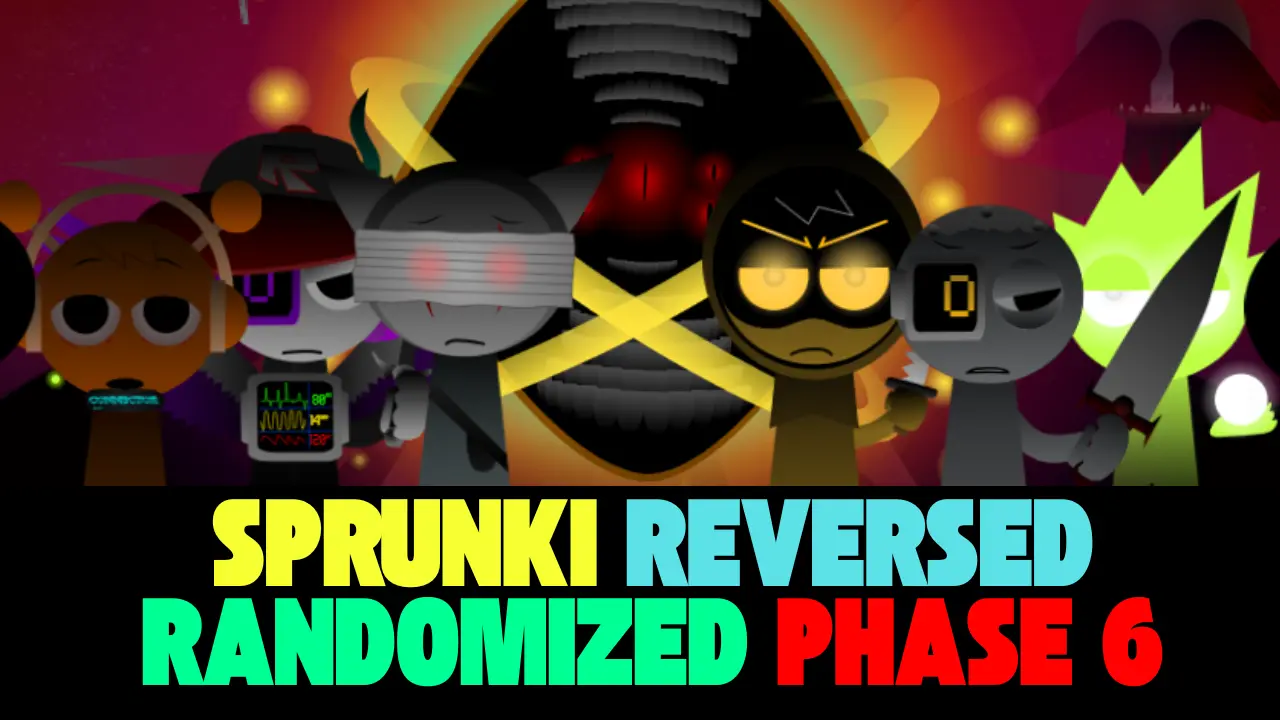
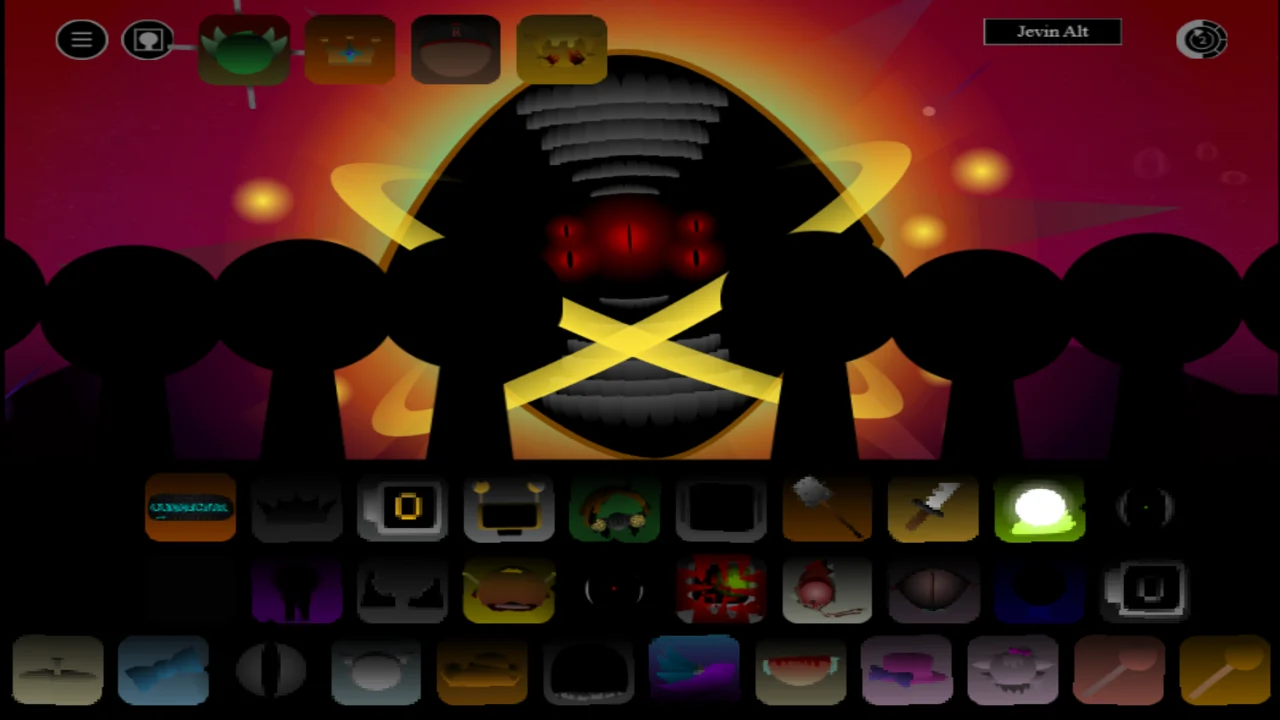
The biggest reveal in Sprunki Reversed Randomized Phase 6 occurs when the large central character is activated.
A black circular body fills most of the background. It is surrounded by orange and yellow light, making it resemble a star collapsing, expanding, or entering a supernova-like state.
Several red eyes appear across the front.
Grey layered bands run over the top and bottom portions, while two broad yellow strips cross the lower face.
The scale immediately changes how the rest of the lineup is viewed. The foreground characters no longer look like the centre of the performance. They look like smaller figures standing in front of a much larger event.
The Supernova Form Is More Environment Than Character
The central figure does not behave like a standard performer placed into one slot.
Its body is too large, and most of it sits behind the active cast. The orange glow spreads across the background, while the yellow ring-like shapes extend beyond the black centre.
The red eyes remain visible even when the foreground becomes crowded.
This makes the form feel attached to the stage itself.
The character is still part of the mix, but visually it functions like a moving background layer rather than a normal member of the front row.
Oren Feels Like a Starting Point
Oren on the left has one of the simplest designs. Large circular headphones or loops sit on both sides of the head. The eyes are dark and heavy, and a glowing cyan display appears near the chest.
Nothing about the character is oversized or especially violent.
Visually, it also remains easy to find against the bright central background.
The Screen-Based Character Is Easy to Lose
Another performer near the left side uses screens and display panels.
Part of the face is pale, while a darker section contains purple interface details. A small monitor on the body shows coloured lines that resemble live readings.
The character is partly hidden by nearby performers in the complete lineup.
When played alone, the screen details are clear. In the full mix, they become small enough to disappear behind larger heads and shoulders.
This is one of the characters that benefits most from an isolated test.
The Bandaged Character Has One of the Stronger Faces
A central grey performer has its eyes covered by layered bandages.
A faint red glow remains visible underneath, while dark pointed shapes extend from the sides of the head. Small marks and scratches break up the otherwise smooth face.
The mouth is simple and slightly downturned.
The design is restrained but readable. It avoids the common approach of adding more eyes and instead hides them.
Against a stage full of glowing eyes, the covered face becomes one of the more distinctive choices.
The Yellow-Eyed Hooded Performer Is Hard to Misidentify
The dark hooded character near the middle has bright yellow eyes and an angular line above them.
Its face is almost entirely black, with only the yellow features and a small mouth visible.
The silhouette is compact and easy to recognize.
This performer stands out because it does not need a large weapon, exposed wound, or complicated animation. The contrast between the yellow eyes and black face is enough.
Its sound also feels more controlled than several of the heavier layers.
The Grey Display Head Looks Half Awake
Another foreground character has a round grey head with two different eye designs.
One side contains a square digital display. The other is a dark, half-closed eye. The uneven face gives the character a permanently tired or partially active expression.
A small orange object is held in one hand.
The character looks mechanical without being fully robotic. The digital eye connects visually with several block-shaped icons in the selection panel.
This is one of the easier characters to remember after the first playthrough because the asymmetrical face is unusual.
The Green Performer Cuts Across the Whole Row
The bright green figure on the right has a flame-like or crown-shaped head.
Its face is pale, while the eyes remain narrowed and calm. A large black-and-grey blade runs diagonally across the body.
A glowing white orb appears close to the lower side.
The blade is the most important part of the design because it cuts across the otherwise vertical foreground lineup.
The character is also much brighter than the figures beside it. Even when the stage becomes crowded, the green head and diagonal weapon remain visible.
The Sound Map Has to Be Relearned
The visual randomization is obvious, but the sound reassignment takes longer to understand.
A mechanical-looking performer may contribute a softer melodic phrase. A simple face may carry a heavier rhythmic layer. An icon that looks like a weapon may lead to a sound with little connection to impact or metal.
The best way to learn the game is to build a new sound map from scratch.
For each slot, the player needs to remember:
- the icon;
- the character that appears;
- the type of loop;
- and whether that loop works as a base, accent, or atmosphere.
Trying to force the normal lineup onto this version only creates confusion.
The Central Form Works Best as a Background Layer
The large celestial performer adds atmosphere more than rhythmic precision.
Its sound gives the mix weight and scale, but it can make smaller loops harder to hear if too many foreground characters are active.
Keeping it on while testing one or two smaller performers works well.
Using it alongside the entire cast creates a dense wall of sound where the finer electronic and melodic details begin disappearing.
The visual scale suggests that it should dominate, and the audio behaves similarly.
A Better Mix Uses Fewer Icons
The strongest arrangement does not use every available slot.
A clearer combination usually includes:
- the large background form;
- one steady rhythmic performer;
- one electronic or screen-based character;
- one melodic loop;
- and one sharper accent.
This leaves enough room for each part to remain audible.
The randomized format encourages experimentation, but the complete cast is better treated as a final test than as the ideal mix..
What Feels Specific to This Version
The most distinctive parts of Sprunki Reversed Randomized Phase 6 are not generic horror details.
They are:
- the eyes hidden inside the space background;
- the large supernova-like central performer;
- the crossed yellow bands;
- the Jevin Alt control;
- the crowded multi-row icon panel;
- and the contrast between the oversized background form and restrained foreground cast.
These elements give the game a clearer identity than a simple character shuffle.
Where the Interface Gets in the Way
The icon panel is large, but size does not make it easier to understand.
Several icons are dim, abstract, or visually similar. The dark interface also causes black and grey symbols to blend into the background.
The foreground characters can block one another once the lineup fills up.
The Jevin Alt label is clear, but many other alternate or randomized changes are not explained.
The game expects repeated play, and the first session is mostly spent identifying what each slot actually does.
Editor’s Review
Sprunki Reversed Randomized Phase 6 feels more like a custom experimental mixer than a standard phase continuation.
TheSpaceRedBird gives the project one strong visual centre instead of distributing equal attention across every performer. The supernova-like form dominates the screen, and the smaller cast exists around it.
The Jevin Alt option is a good addition because it introduces variation without forcing the player into another separate build.
The central form is the clear highlight. Its red eyes and crossed yellow bands remain visible throughout the session and make the phase feel tied to one large cosmic event.
Overall, the game is strongest when played patiently. Its randomization is more interesting after the confusion of the first session begins turning into recognition.
Disclaimer
Sprunki Reversed Randomized Phase 6 is an unofficial fan-made project created by TheSpaceRedBird. Sprunkit is not affiliated with, endorsed by, or officially connected to TheSpaceRedBird, So Far So Good, NyankoBfLol, or other contributors connected to the project.
Sprunki Reversed Randomized Phase 6 FAQs
Does Sprunki Reversed Randomized Phase 6 use normal drag-and-drop music mixing?
Yes. Characters are selected and combined to create a layered track.
What does the randomized part change?
It makes the icon order, character assignments, and visual forms less predictable.
Who created Sprunki Reversed Randomized Phase 6?
The game was created by TheSpaceRedBird.