Trending New Games
Sprunki Phase 27
Game Credits
Game title: Sprunki Phase 27 (Unofficial fan-made horror music mod)
Game creator: Unknown
Original Sprunki concept: NyankoBfLol
Official status: Community-made project
The Stage Is Designed Around Overlap
Sprunki Phase 27 does not treat every performer as an equal-sized figure standing in a clean row.
Some characters occupy normal stage positions. Others extend beyond those positions and cover parts of nearby performers.
By the time the full lineup is active, the stage looks less like a group performance and more like a single connected mass.
The Large Left-Side Creature
The most visually dominant figure appears on the far left.
Its body is almost completely black, with irregular white patches and red outlines. A large circular opening sits in the centre, surrounded by a red edge. Above it, another mouth opens sideways with sharp white teeth.
The creature appears partly embedded in the stage rather than standing on it.
Its irregular outline makes it difficult to determine where the body ends and the background begins.
The design is especially noticeable when played alone because the two mouth-like openings can be seen clearly. In a complete mix, nearby performers cover parts of the lower section.
This figure contributes more to the overall shape of the stage than most of the standard-sized characters.
The Small Red-Haired Figure
A smaller performer stands beside the left-side creature.
Long red strands extend from the head and create a wider outline than the body itself. The face remains mostly dark, while pale teeth or facial details appear beneath the hair.
The lower body is narrow and uses the same black-and-red palette as the stage.
This character does not have the same scale as the larger creature, but the hair animation gives it noticeable movement.
It is easier to examine before activating the central mechanical performer, which otherwise covers part of its right side.
The Mechanical-Organic Centrepiece
The most detailed performer appears close to the centre.
Its design combines yellow outer pieces, black internal sections, grey mechanical framing, red circular details, and a long vertical mouth filled with teeth.
The figure looks partly robotic and partly organic.
A mask or damaged casing covers the upper section, while the lower face resembles a creature trapped inside a machine. Several circular red patterns appear near the mouth and body.
When this character moves, many parts animate at once. The mouth, outer frame, and internal details compete for attention.
It is one of the strongest individual designs in Phase 27, but it is also one of the hardest to read during the full mix.
The Grey-Faced Performer
The grey character near the centre uses a much simpler design.
Its head is round, with heavy dark eyes and red marks underneath. The mouth is small, and the body is built from pale grey and muted pink sections.
Unlike the more aggressive figures, this performer does not rely on a large mouth, spikes, or extended limbs.
Its expression looks tired rather than violent.
That restraint makes the character easier to identify once the stage becomes crowded. The smooth face remains visible between the larger mechanical and skeletal figures.
The Green Crowned Character
The tall green character is defined by its head shape.
Sharp green points form a crown-like outline around two black eye sockets. Red marks run downward from the eyes, while a row of white teeth remains visible below.
The neck is long and made from repeated white skeletal sections.
Its design is vertically narrow, which helps it remain visible even when surrounded by wider characters.
The crown-like head and segmented neck are the clearest identifiers. The character does not need a complicated animation to remain noticeable.
The Black Head With a White Core
The right-side performer has a simple circular black head with a bright white shape in the centre.
A dark mouth filled with small teeth sits below the light, while large white teeth extend from both sides of the face. Red marks hang beneath the mouth.
The white core becomes the main visual focus because the rest of the face blends into the dark stage.
This is one of the more readable designs in the phase. Even when other performers overlap, the bright centre remains visible.
The character looks less physically complex than the left-side creature or the mechanical centrepiece, but the contrast gives it a strong presence.
The Orange Animal-Like Character
The orange creature on the far left has a long open mouth filled with teeth.
White markings break up the orange face, while a bright orange glow appears near the lower section. The body sits low on the stage and is partly hidden by the border.
This performer looks more animal-like than most of the upright figures.
Its mouth animation is easier to observe when used alone. In a full arrangement, the red-haired figure beside it covers part of the upper body.
The orange glow also becomes less noticeable once the brighter red elements appear across the stage.
The Dark Red Hanging Character
A tall red-black performer appears with long, hanging hair or spikes.
The face is mostly concealed, leaving pale teeth visible inside a dark opening. White rib-like structures appear lower on the body.
The narrow torso gives the character a suspended appearance.
Its design shares some features with the smaller red-haired performer from the first group, but this version looks more skeletal and damaged.
The hair and thin body create a vertical movement that contrasts with the wider creatures around it.
The Blue Performer
The blue character near the centre is visually calmer than almost everyone else.
It has a rounded blue head, dark half-closed eyes, a small circular mouth, and a simple body. One arm extends to the side.
The design contains no large teeth, exposed machinery, or exaggerated spikes.
Because of this simplicity, the blue performer becomes an important visual pause. It remains recognizable while the surrounding stage fills with red and black detail.
Its sound also becomes easier to identify because the animation does not distract from the loop.
The Large Red Mouth Behind the Cast
A wide red-black form appears behind several central performers.
Its upper section resembles an open mouth, while black shapes cross in front of it. The body is partly hidden, making it difficult to determine whether it is a full performer or a large background-connected figure.
The red interior remains visible between the crossing black elements.
This figure contributes strongly to the full stage image but is difficult to isolate visually.
When nearby characters are removed, more of its shape becomes visible, although the lower section still blends into the background.
The Formal Black Figure
The large black character wearing a hat and white tie is one of the easiest figures to identify.
Narrow white eyes appear beneath the hat, while several long black extensions spread from the sides of the body.
The central shape is simple: round head, hat, white tie, and dark torso.
The side extensions make the character much wider than expected and cover parts of adjacent performers.
Despite the heavy black palette, the white eyes and tie keep the figure readable.
This is one of the few designs in the phase where clothing is more important than facial mutation.
Sound Layering
The music uses a mix of:
heavy percussion;
low drones;
sharp effects;
distorted vocal sounds;
mechanical rhythms;
short melodic fragments;
and harsh mouth-based loops.
The sound balance changes noticeably depending on the number of active performers.
With two or three characters, individual loops remain clear. The player can hear where a rhythm begins and where a texture ends.
With the full lineup, heavier effects dominate. Lower sounds merge together, while sharper vocal and mechanical elements remain easier to hear.
Some of the largest characters do not necessarily produce the loudest sounds. A visually simple performer may add a more noticeable loop than a creature occupying half the stage.
That contrast prevents appearance from becoming a reliable guide to sound.
The main weakness is visual obstruction
Several performers cannot be seen properly once the full group is active. Smaller characters disappear behind larger figures, while black body parts merge with the background.
The central mechanical character contains many details, but some become unreadable during movement.
The second lineup is particularly difficult to separate because several dark shapes extend horizontally across the stage.
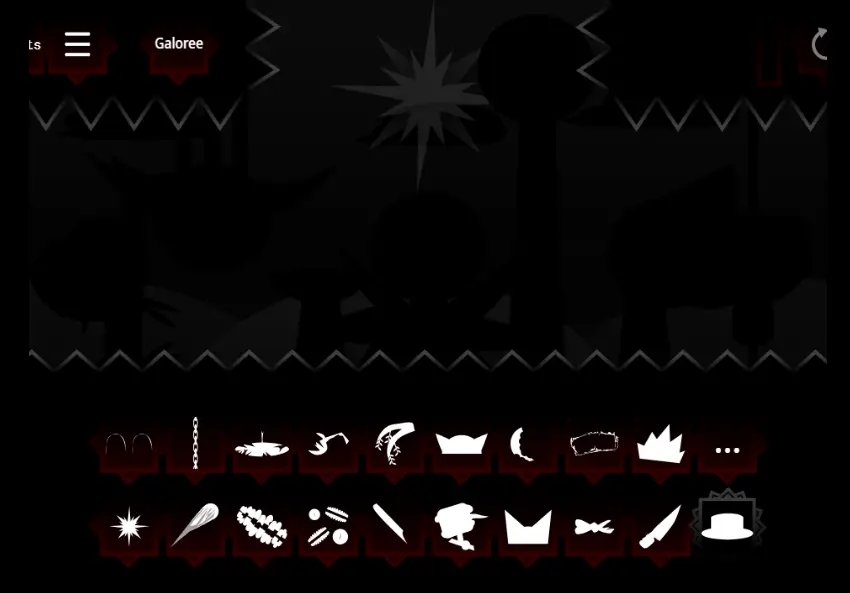
The icons also provide limited practical information. Their visual style fits the phase, but they are less useful than complete portraits for learning the cast.
Editor’s Review
Sprunki Phase 27 wants characters to collide visually rather than remain neatly separated.
Musically, the phase benefits from a slow build. The individual loops have more character when heard separately. The complete mix is dense and works better after the player already understands the lineup.
It is not especially clear, but that appears intentional. Its identity comes from crowding the stage until the performers begin to look like parts of one larger structure.
Game Screenshots
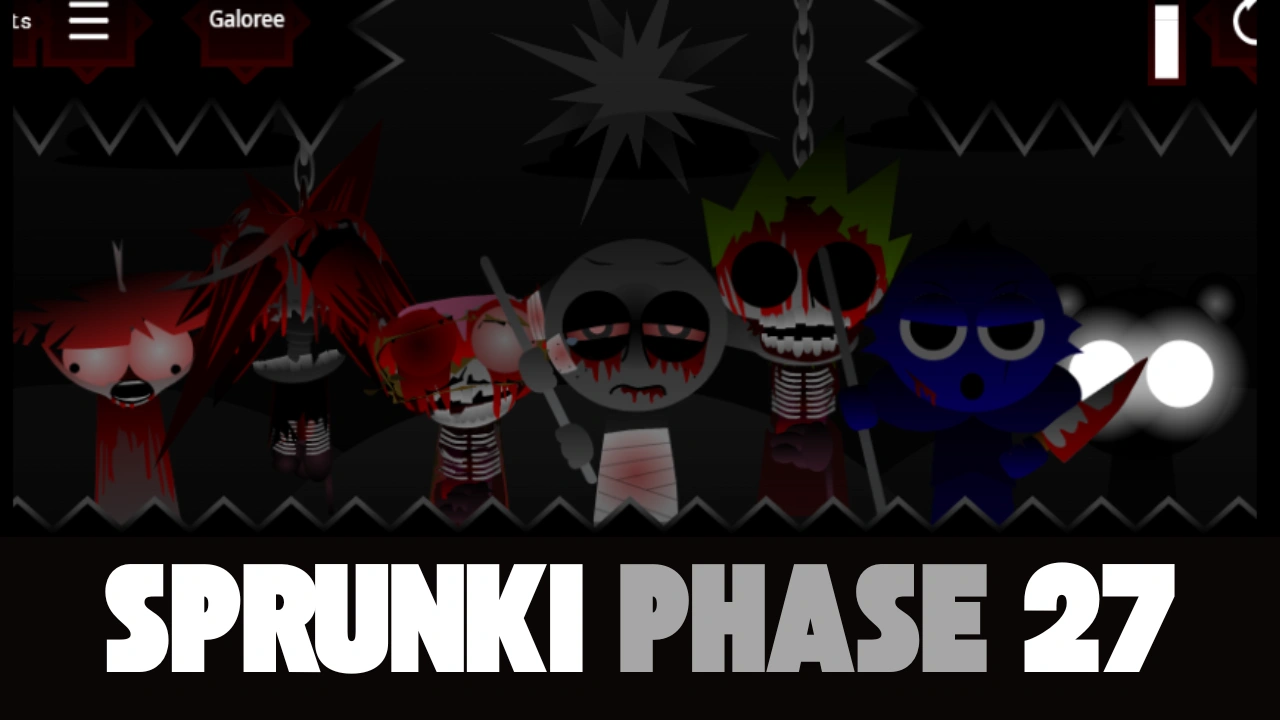
 sprunki phase 27 stage image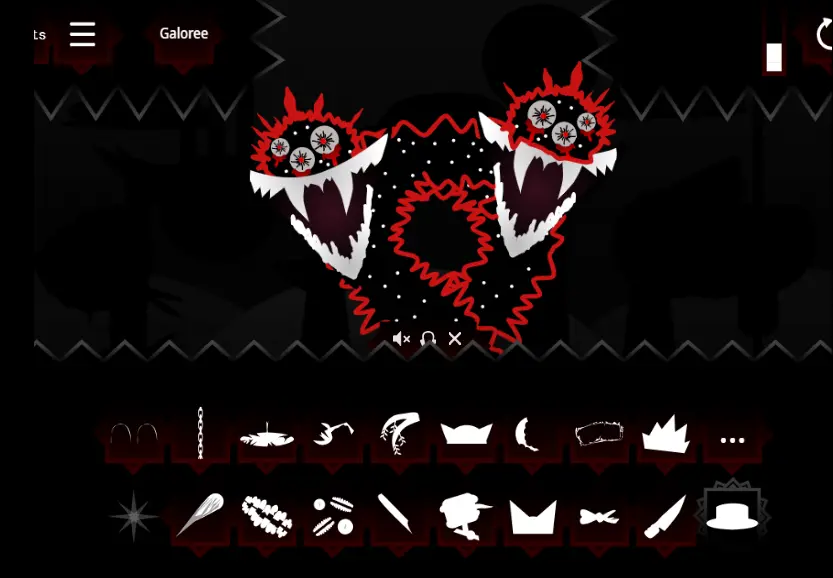
Sprunki Phase 27 is an unofficial fan-made project. Sprunkit.com is not affiliated with, endorsed by, or officially connected to Incredibox, So Far So Good, NyankoBfLol, or the creators and contributors of this specific mod.
All character designs, artwork, animations, music, sound effects, game files, logos, and related materials remain the property of their respective creators and rights holders. Sprunkit does not claim ownership of the game or its underlying creative assets.
Sprunki Phase 27 FAQs
Is every character easy to see?
No. Smaller performers are often covered by larger figures once the full lineup is active.
Is it better to activate every character immediately?
Testing characters individually first makes their sound and animation easier to understand. The full lineup becomes visually and musically dense.
Is Sprunki Phase 27 scary?
It uses large mouths, exposed teeth, dark eyes, skeletal necks, damaged machinery, and heavy black-red imagery. It is more visually disturbing than dependent on sudden scares.